Pull one purse out of a stack of six and the whole tower slumps sideways: straps tangle, and the leather one creases where it lands. That collapse is the real reason it feels impossible to store handbags in a small closet. Bags are soft, awkwardly shaped things, and most of us insist on treating them like books. Stand them upright instead, and a shelf you thought held four bags will hold nine, with not one hole drilled in a rental wall.
Below are ten fixes in the order I’d actually tackle them. If you only have the patience for two, do numbers 2 and 5, because together they solve the sagging and the burying at the same time.
1. Edit first, and be honest about the tote you never carry
No product saves you from owning fourteen bags in a closet built for four. Empty every pocket (expect lip balm, a hair tie, and a receipt from two apartments ago), then sort everything on the bed into three piles: weekly, occasional, and sentimental but dead.
Weekly bags earn the easiest reach. Occasional ones can live higher or deeper. The sentimental pile is where people stall, so be blunt about it: a cracked, stained, permanently creased bag is renting prime shelf space it hasn’t earned. Photograph it if the memory matters, then move it out. Six well-stored bags beat fourteen crushed ones.
2. Store handbags upright with vertical shelf dividers
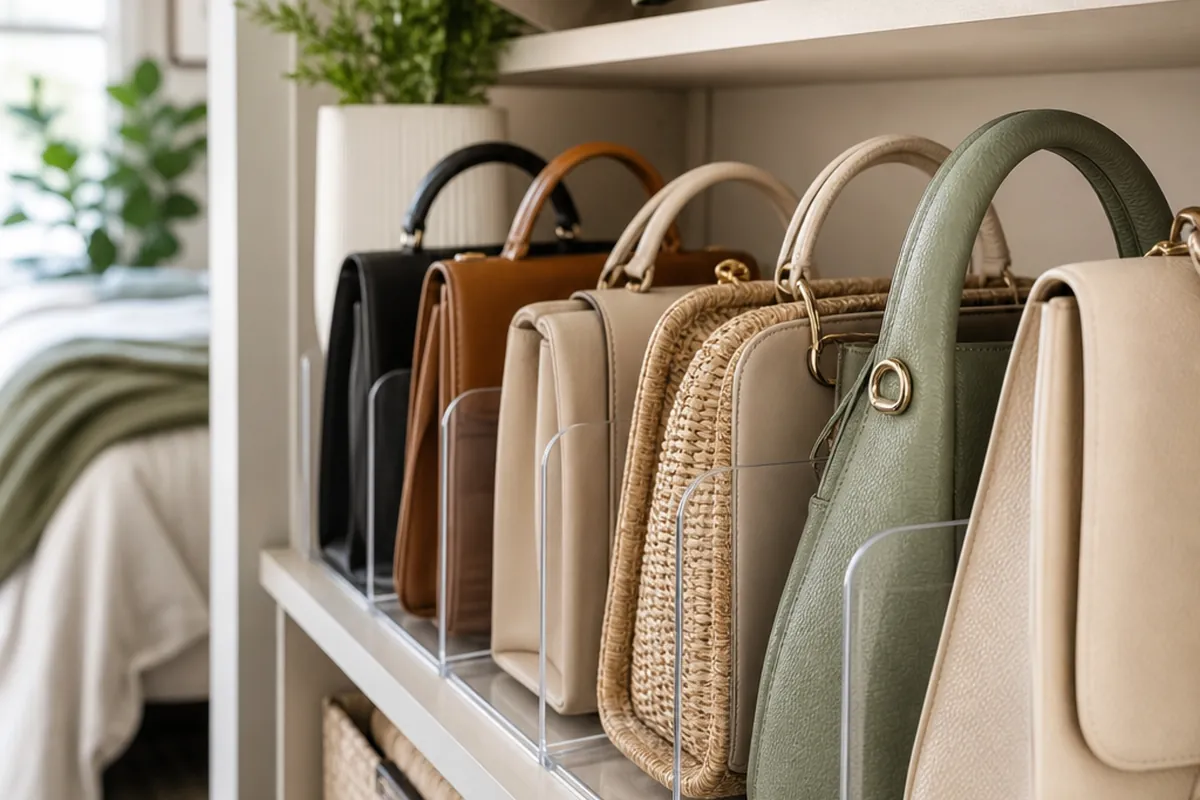
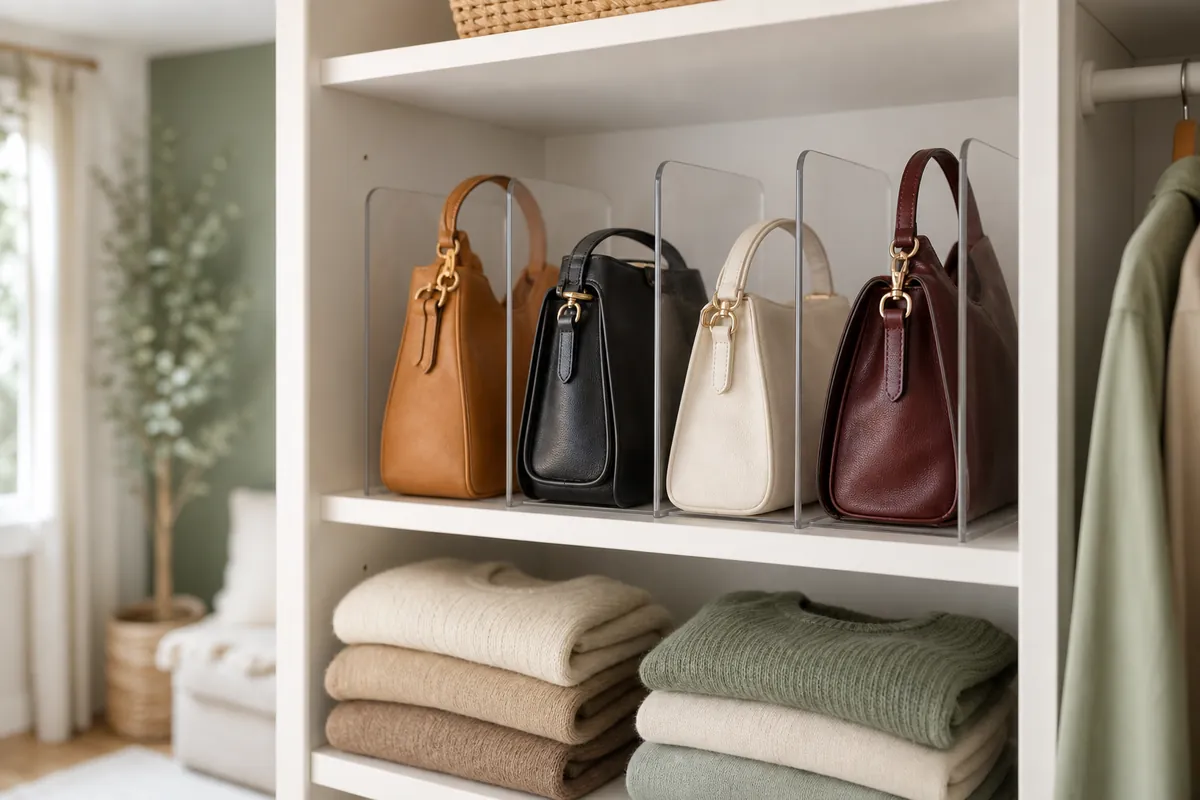
This single change does more than the other nine combined. Vertical purse shelf dividers slot onto a standard closet shelf and split it into narrow upright bays, so each bag stands on its base like a file in a drawer. Nothing leans, nothing disappears behind anything, and you can lift the third bag from the left without disturbing its neighbors.
Buy the style that sits over the shelf edge rather than clamping onto it. Rental closets usually have wire or thin particleboard shelves, and clamps either won’t grip or leave dents you’ll be looking at on move-out day. Set the bays by bag type: two or three wide slots for totes and structured satchels, then a run of skinny slots for crossbodies. Deep shelf? Bags in front, off-season odds and ends pushed behind them.
One caution. Unstructured hobo bags will still flop over inside a divider bay unless you stuff them first, which is number five. Structured bags thrive here; slouchy ones need a little help.
3. Hang the bags you carry every week
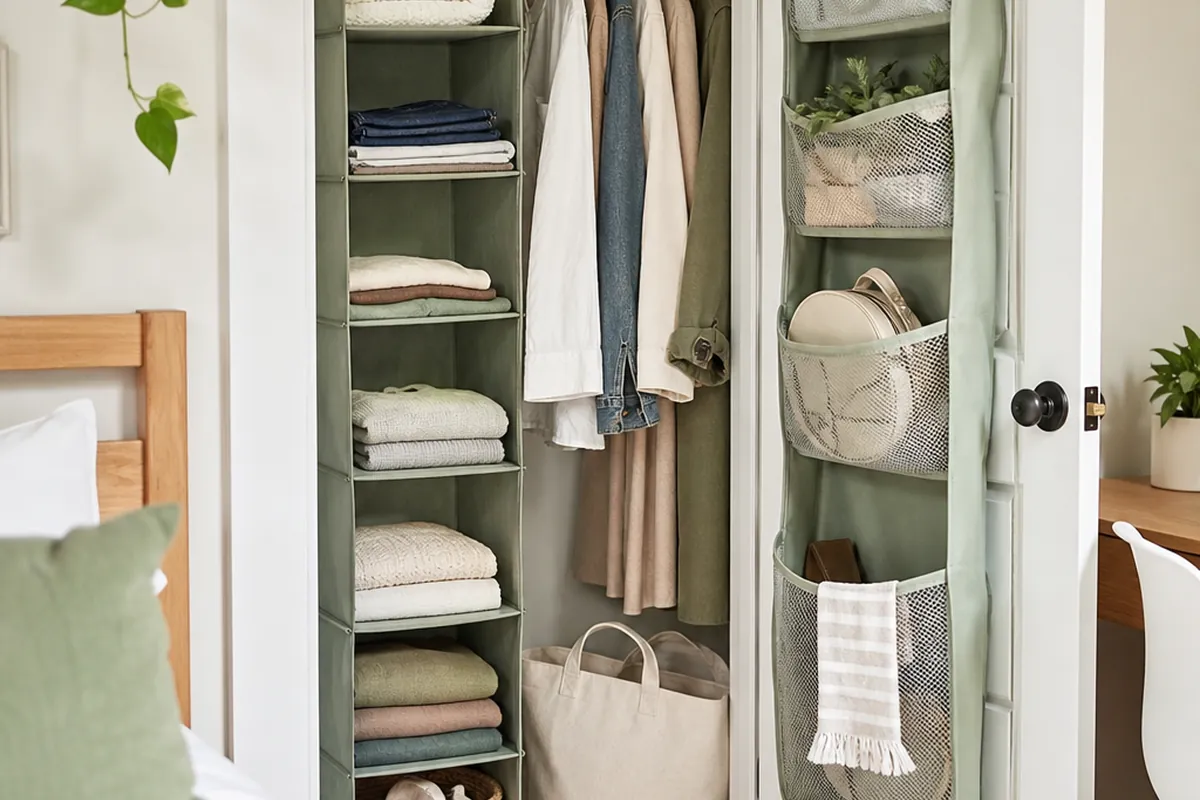
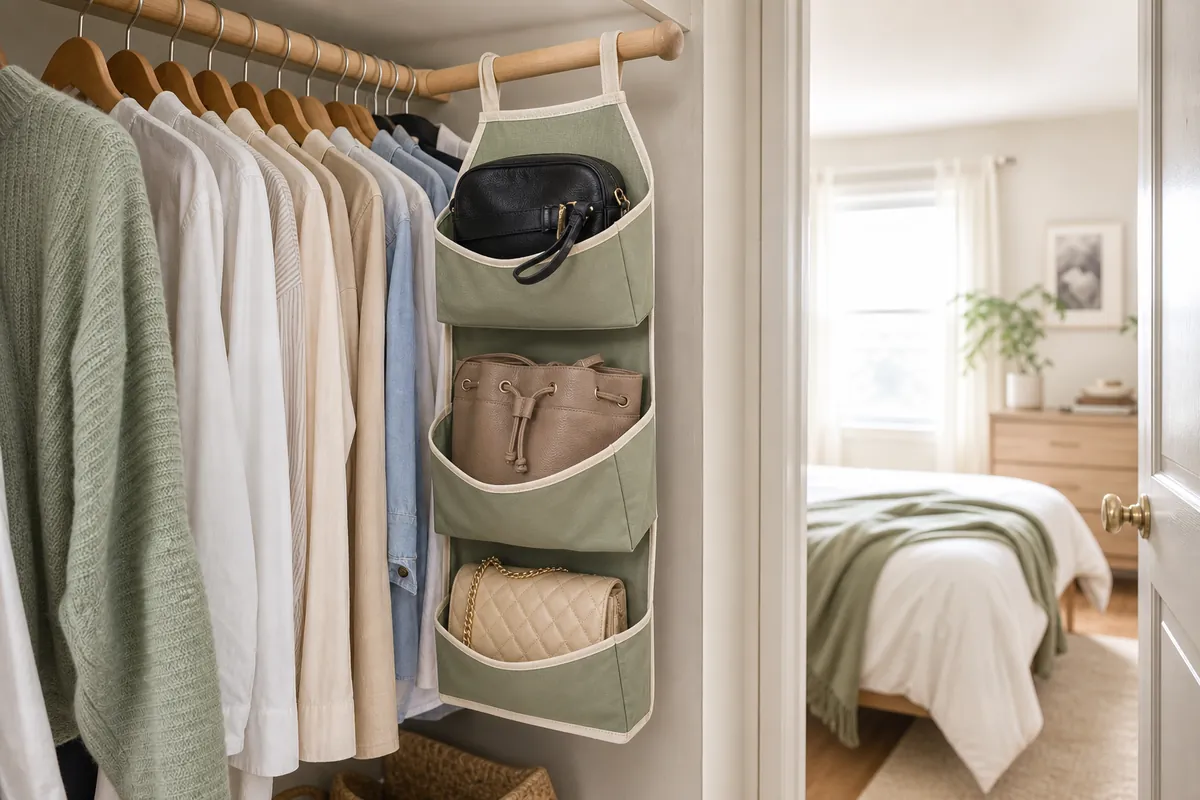
A hanging handbag organizer clips over the closet rod and gives you a column of open pockets, typically six to ten, each sized for one purse. For daily bags, nothing beats it, because you never lift or shift a thing. Reach in, take the bag, and the pocket stays open waiting for its return.
Position it at the end of the rod closest to the door rather than the middle, or you’ll split your hanging clothes into two useless halves. On a double-rod setup, hang it from the upper rod so it drops into the dead air above short shirts. That’s the same logic behind the other rod tricks in doubling closet space as a renter.
The trade-off is real: an organizer eats roughly eight to ten inches of rod. If your clothes are already packed shoulder to shoulder, skip this one and put the money into dividers instead.
4. Give your best bag a clear acrylic display case
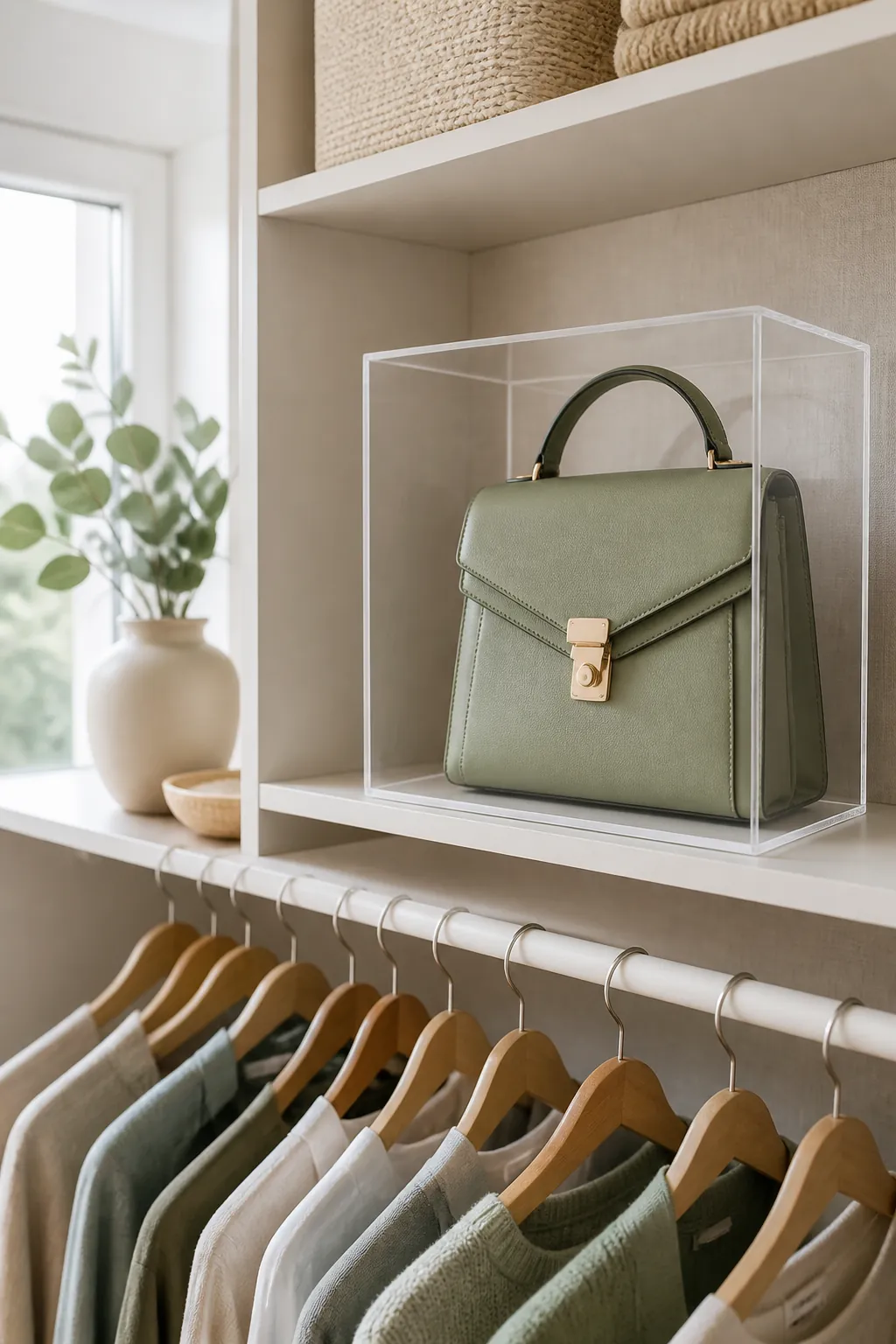
If one bag in your collection cost real money, it should not be sharing a bay with a gym duffel. A clear acrylic bag display case blocks dust and scuffs and, more importantly, stops the slow deformation that comes from being shoved around. Because you can see through it, the bag stays in your rotation instead of vanishing inside an opaque dust bag.
Put the case on the top shelf, where humidity is lowest and stray hands rarely reach. The rigid lid doubles as a small platform, so a hat or a folded scarf can sit on top without pressing on the bag underneath. Own two or three good pieces? Stack a case each into a short column; it reads as intentional rather than fussy.
5. Stuff every soft bag so it holds its shape
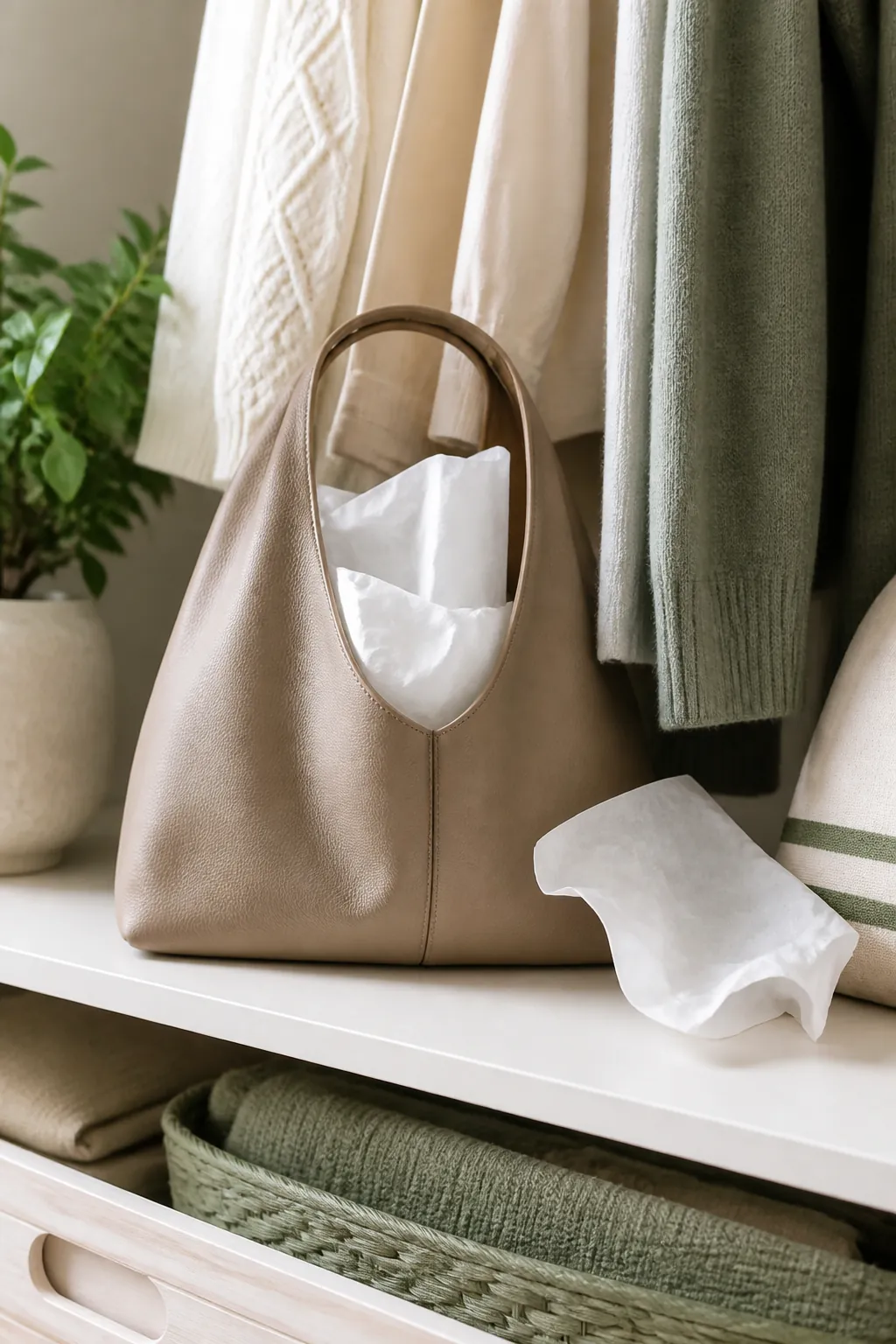
Structured bags store themselves. Soft ones fold in half and stay that way, and a fold that sets in leather does not come out. Fill each unstructured bag until it’s firm but not straining, using the tissue it came with, a rolled cotton pillowcase, an old T-shirt, or a length of pool noodle for long shoulder bags.
Avoid newspaper, which transfers ink onto pale linings, and avoid plastic bags, which trap moisture against leather. Bonus: a stuffed bag stands up unassisted, so you get most of the benefit of number two even with an inexpensive divider set.
6. Nest small bags inside big totes (with one rule)
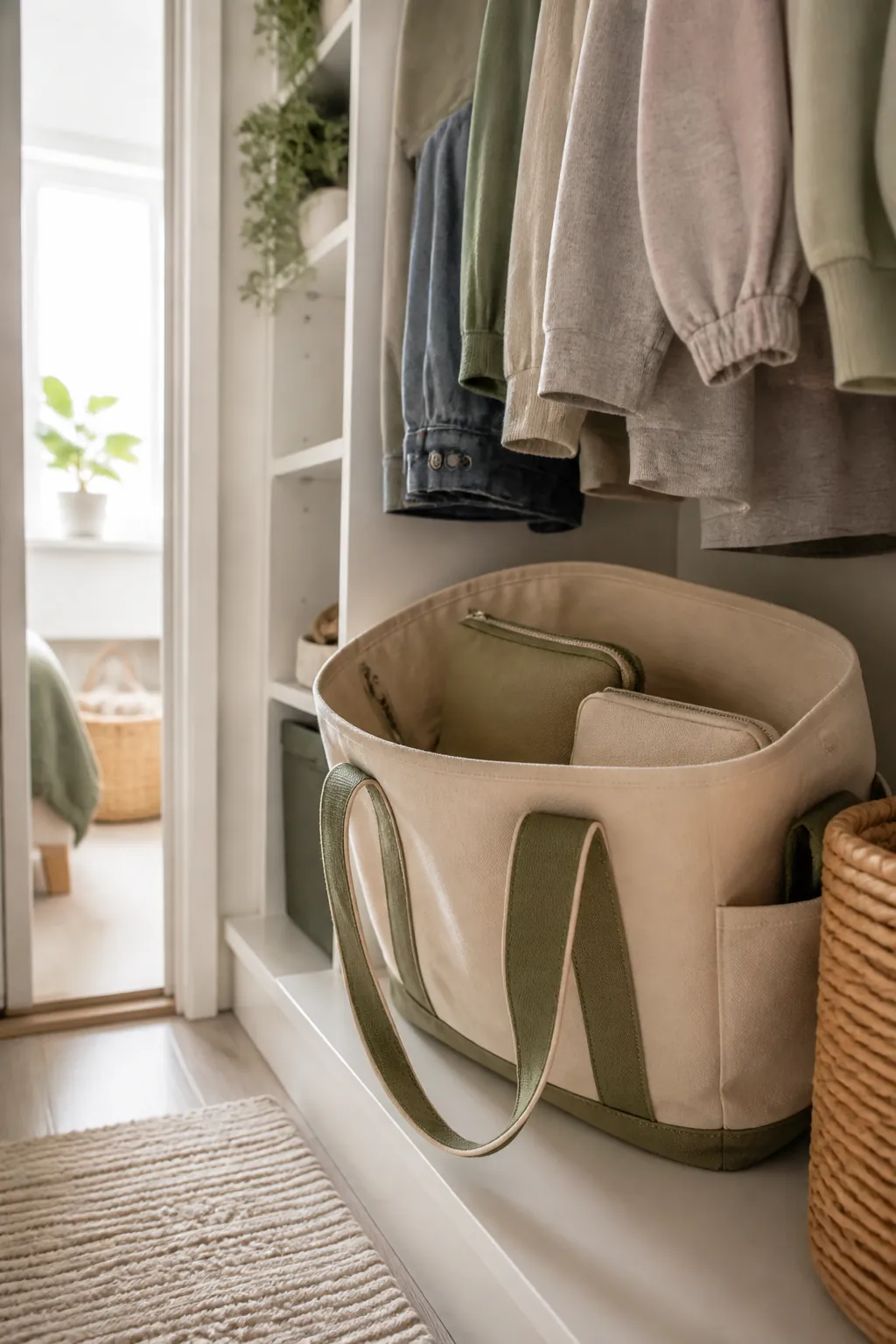
Nesting is either brilliant or the reason you own three bags you never see again. The rule that keeps it brilliant: nest only inside your two largest totes, and only bags you reach for less than once a month. A canvas weekender swallows two clutches and a small crossbody without bulging.
What wrecks the system is hiding something you’ll want on Friday night, because then you’re excavating at 7pm. Leave the outer tote’s handles visible and know what’s inside it, either from memory or a small tag on the handle. One tote holding two evening clutches is a single lookup, not a search.
7. Stand clutches up in a shelf bin
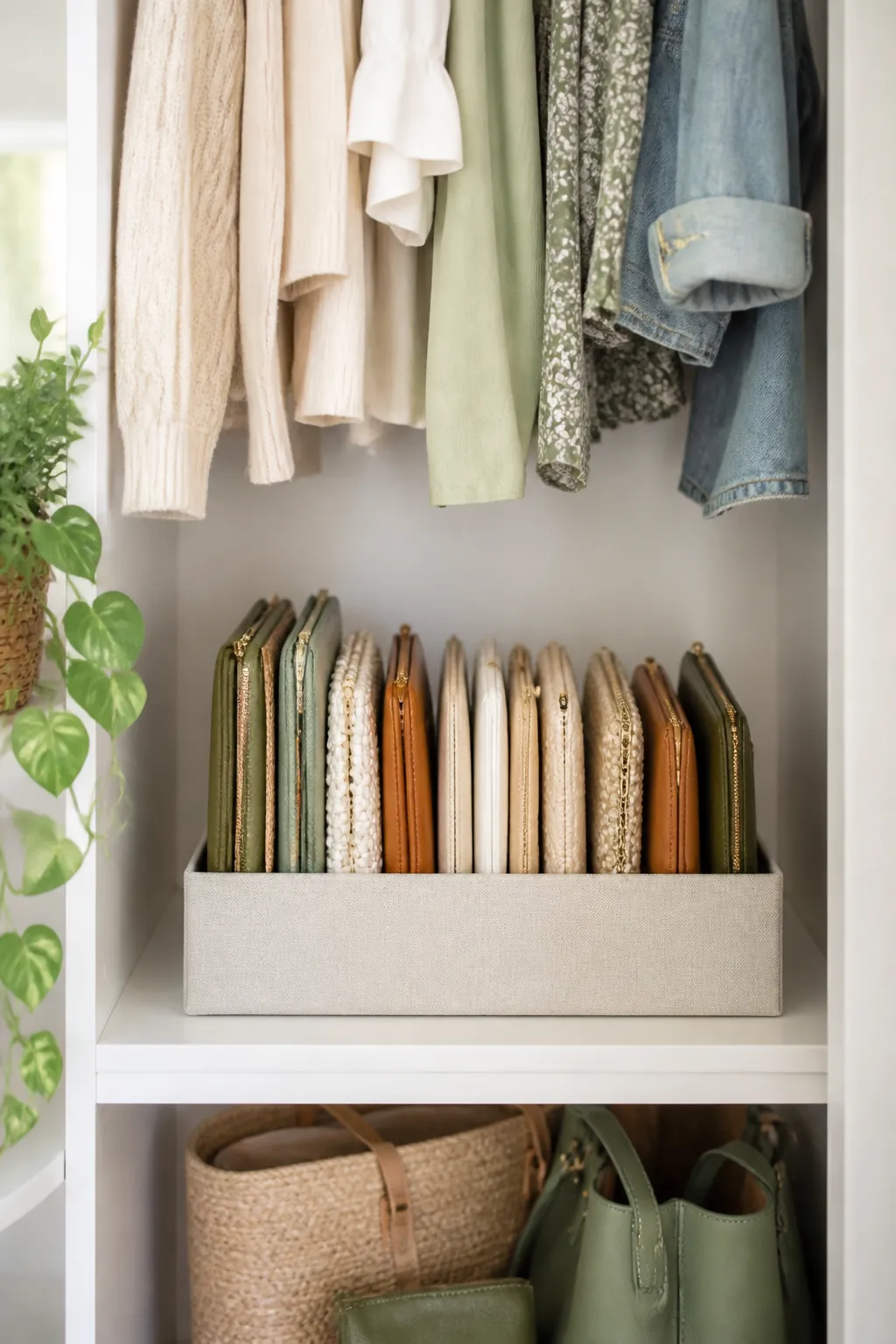
Clutches and wallets-on-chains are too flat for divider bays and too small for hanging pockets, so they end up as a loose pile at the back of a shelf. Instead, stand them on their long edge in a shallow open bin, like records in a crate. Ten fit in the footprint of one tote, and you can flip through them with two fingers.
Choose a clear or mesh-front bin over solid canvas here. Half the reason clutches get forgotten is that they’re visually silent; if you can see them, you’ll wear them. Bin at eye level if you dress up often, top shelf if you don’t.
8. Use the back of the closet door
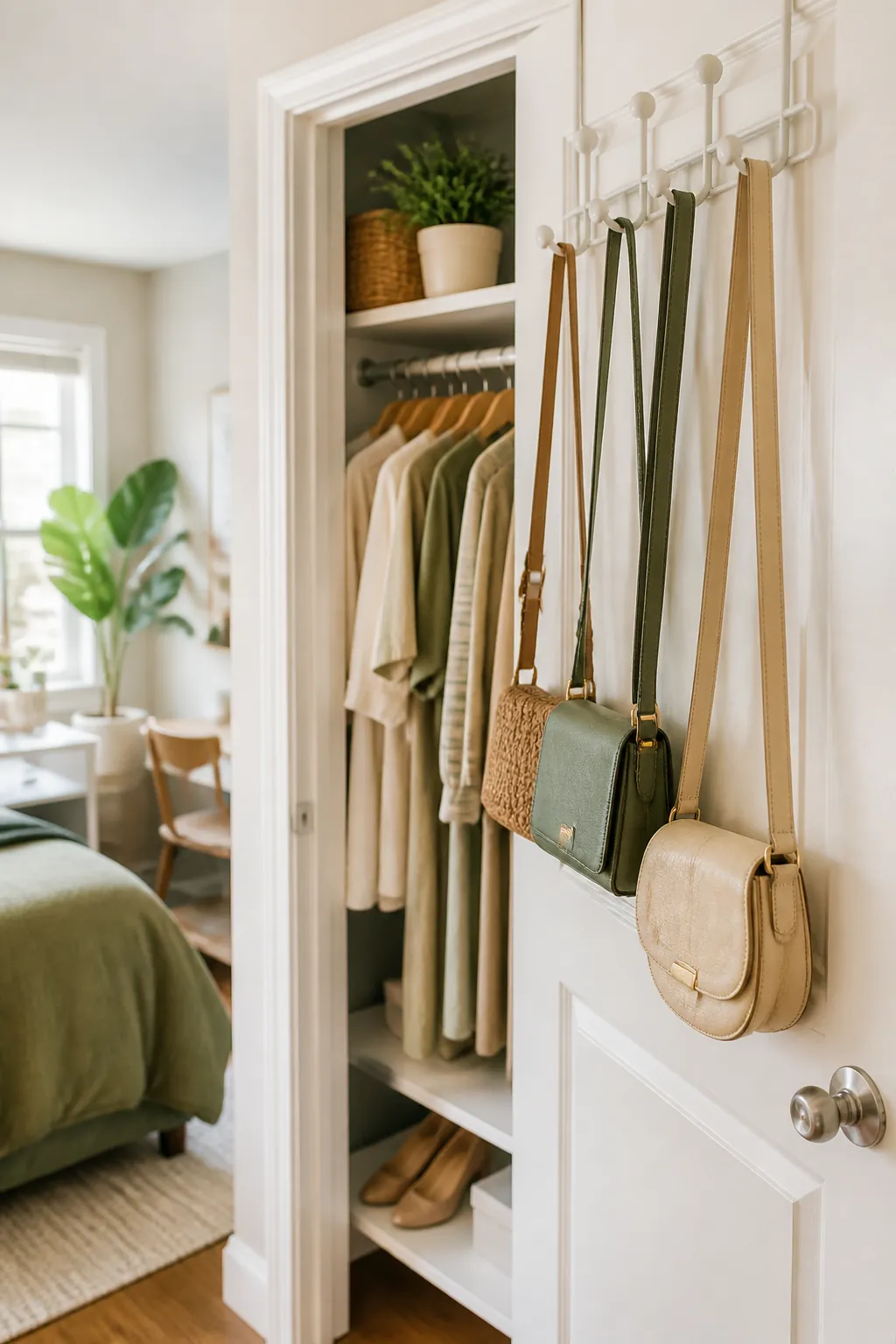
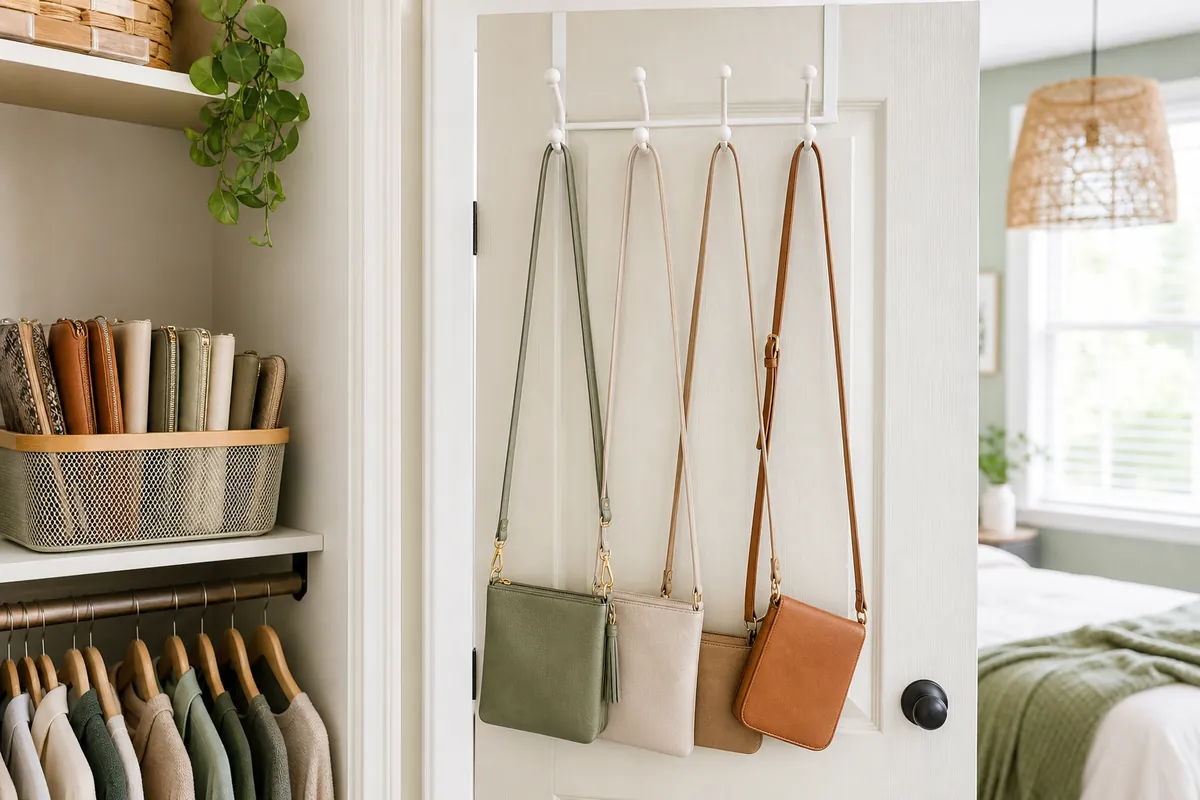
An over-the-door hook rack, the sort that hangs from the door top on padded brackets, converts dead door surface into bag storage. Hook crossbodies and small shoulder bags by their straps, one per hook, so they hang flat instead of bulging into the doorway.
Two rules keep this renter-safe. First, nothing heavy enough to stop the door closing. Second, slip a felt pad or a strip of moleskin behind the brackets so the paint survives your tenancy. It’s the same thinking behind most of the no-drill closet fixes that work when you can’t touch the walls.
9. Hang long straps from S-hooks or shower curtain rings
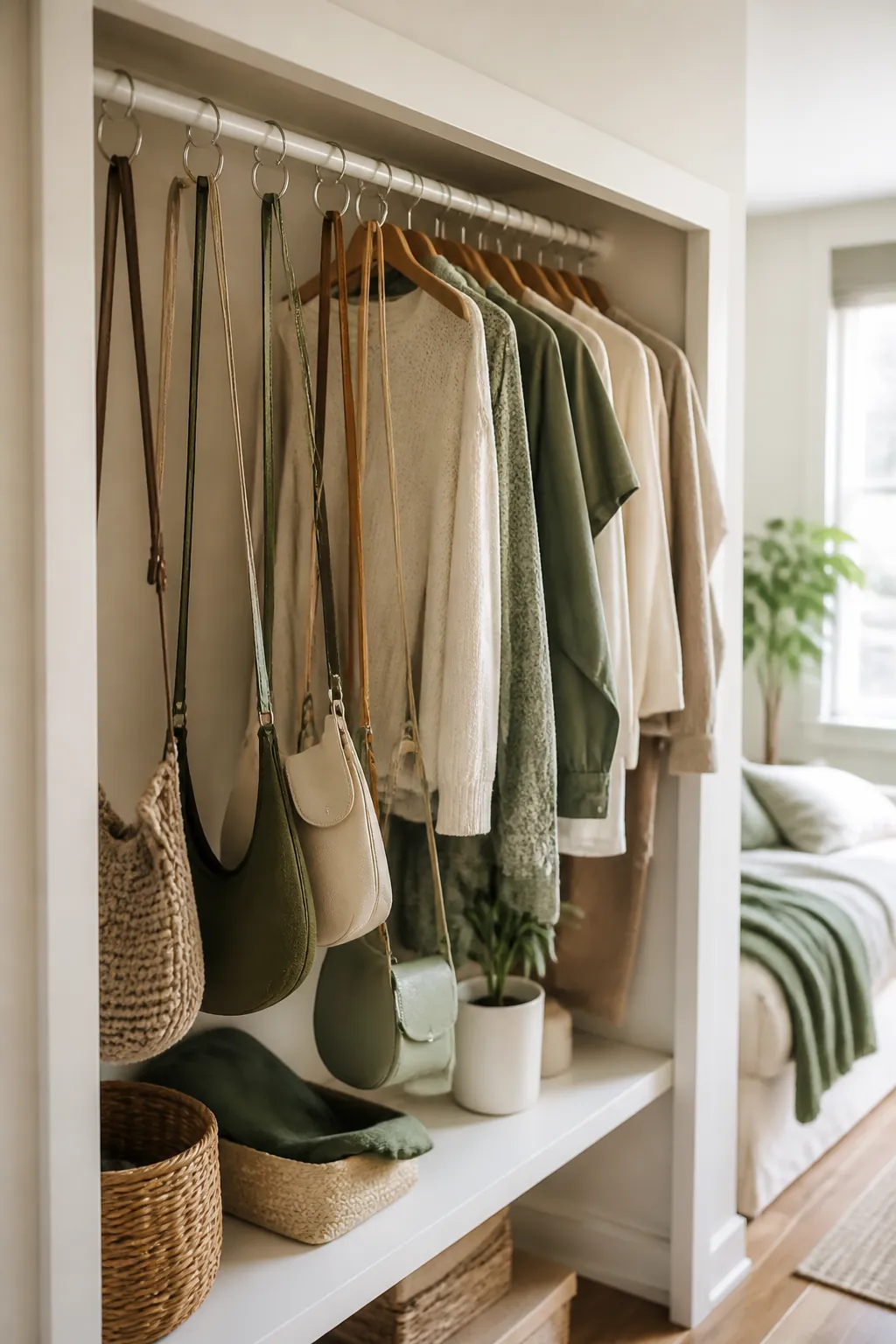
For bags with long straps, thread a shower curtain ring or a small S-hook over the closet rod and hang the strap from it. Rings cost pennies, and the bags dangle below your shortest garments, in space that was going to waste anyway.
Take the weight on the widest part of the strap, never a thin buckle point, and shift which section of strap sits on the hook every few months. A narrow hook left in one spot for a year presses in a crease that stays. Delicate chain or thin leather? Coil the strap into the bag and shelve that one instead.
10. Move off-season handbags out of the small closet
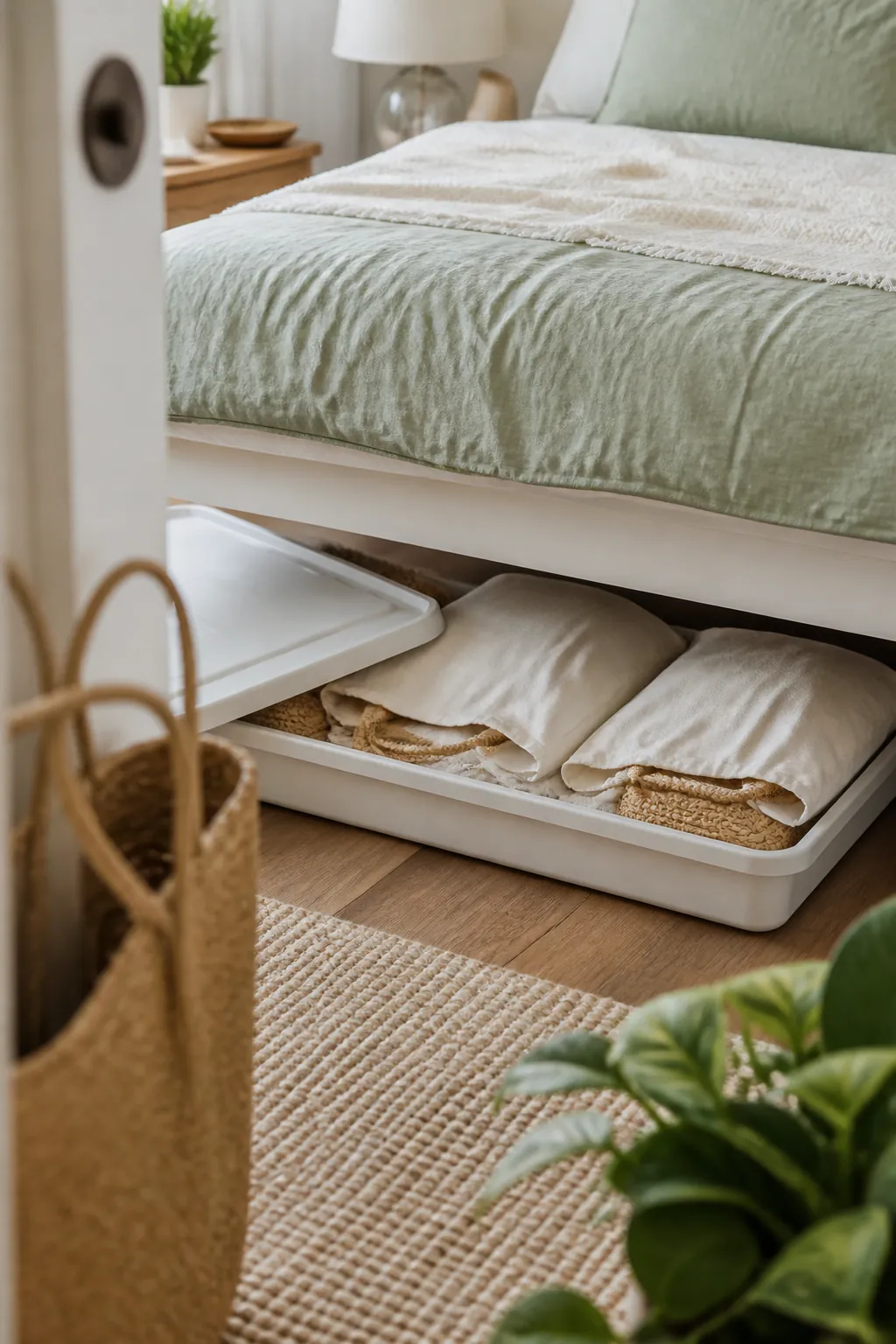
Straw totes in January and shearling bucket bags in July are just occupying inches you need. Stuff each one, slide it into a cotton pillowcase (never plastic), and load them into a flat under-bed container for the season. Rotate twice a year alongside your clothes, on the same schedule as seasonal under-bed clothing storage.
What’s left in the closet is only what suits the weather you’re actually having, which for most people is about half of what was in there.
How to store handbags in a small closet: my default layout
Here’s the arrangement I’d set up in a standard reach-in without thinking twice. Top shelf: vertical shelf dividers holding structured bags upright, with the clear acrylic bag display case at one end for the nicest piece and the clutch bin beside it. Rod, nearest the door: a hanging handbag organizer for the three or four bags in current rotation. Back of the door: over-door hooks for crossbodies. Under the bed: everything off-season.
Notice what that leaves alone, the floor. Closet floors get claimed by shoes within a week, and once a pile forms, the bag system above it starts collecting strays too. If yours is already gone, fix it first with the small-space shoe storage ideas.
Keeping it from falling apart
The maintenance habit takes fifteen seconds at the door: pull the trash out of the bag, stuff it, put it in its slot. A bag dropped on a chair migrates to the floor, then into a stack, and within two weeks you’re back where you started.
Re-stuff soft bags whenever they start to lean, wipe the acrylic case with a microfiber cloth once a month, and give the whole closet a ten-minute reset each time you swap seasons. Do that much, and a small rental closet will keep a full handbag collection in better condition than most walk-ins manage.