Board games are an awkward thing to store because they are heavy, they are all slightly different sizes, and the boxes are built to be stacked in a warehouse rather than lived with.
In a small living room that turns into a specific failure: one leaning tower of boxes beside the TV unit, of which the top two get played and the bottom four have not been opened since you moved in. Almost every fix below is really the same fix, which is getting the games out of a stack.
1. The flat stack is the problem, not the shortage of space
A stack looks like efficient storage and behaves like a locked cabinet.
To reach the third game down you lift the two above it, find somewhere to put them, play, then rebuild the tower. That is enough friction to make people quietly default to whatever is on top, which is why households with thirty games play about four of them.
The stack damages them too. Board game boxes are thin card with no internal structure once the insert is out, and the ones at the bottom of a tall pile bow at the lid over a year or two.
2. Stand them on edge, like books
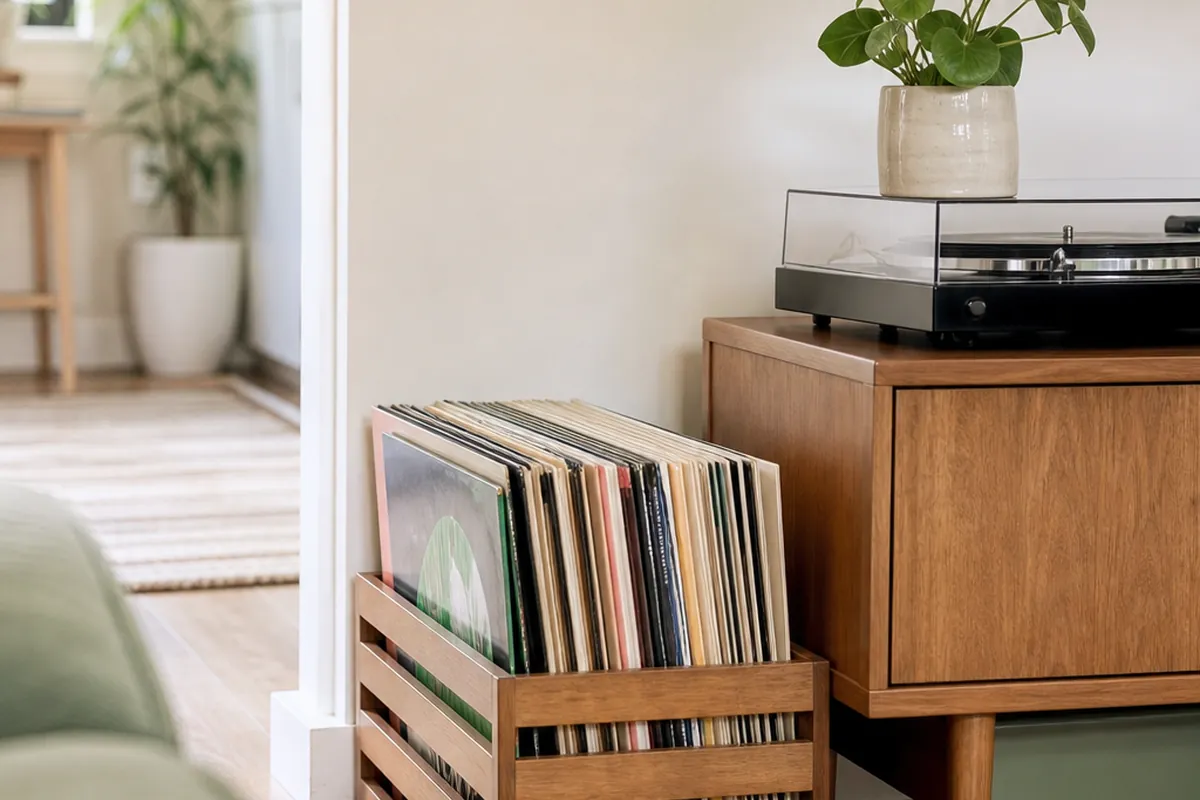
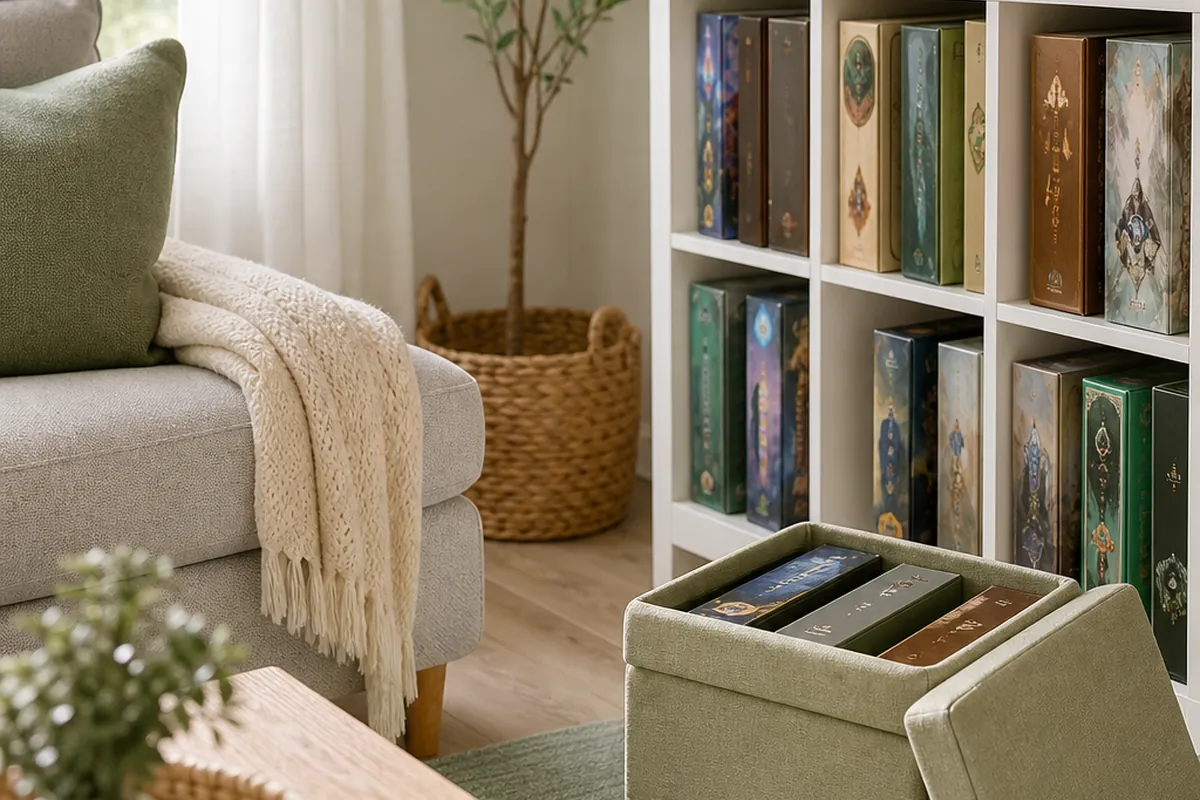
Turn the boxes ninety degrees and store them vertically on a shelf. Every game becomes individually reachable, you can read the spines, and nothing carries the weight of anything else.
This one change fixes most of it. It also makes the collection look deliberate rather than piled, which matters in a room you sit in every evening.
The depth needed is modest: a big box game is roughly 11 to 12 inches square, so any shelf about a foot deep takes them. That is a standard bookshelf, which is why bookshelf organization in a small living room and board game storage tend to be the same job.
3. Band the boxes before you stand them up
The part nobody mentions in the photos: board game lids are friction fit and designed to sit flat. Stand a box on its edge and the lid slides off under its own weight, usually while you are pulling out the game next to it.
A wide rubber band or a fabric box band around each box stops it dead. Bands cost very little and are the difference between vertical storage working and vertical storage redistributing your pieces across the floor.
Do this before you rearrange, not after the first spill. If you would rather not look at rubber bands, fabric bands in a plain color do the same job and read as deliberate, and a few of the heavier games will hold themselves shut without any help. Test each one by tipping it on its edge over the sofa before you trust it on a shelf.
4. Measure your biggest box before you buy any storage
Board games do not come in one size, and the storage that fits the small ones will not take the large ones.
Roughly, there are three groups: big box square games at about 11 and a half inches, medium boxes around 8 by 11, and small card games at a few inches. Measure the largest thing you own, because that is the number every purchase has to clear.
Buying bins first and discovering the flagship game does not fit is the single most common way this goes wrong.
While you have the tape out, measure the shelf height as well as the depth. Standing games on edge needs about 12 inches of clearance, and a lot of adjustable shelving is set at 10 or 11 from a previous life holding paperbacks. Moving one shelf pin is free and decides whether half the collection can stand up.
5. Cube bins for the small boxes, not the big ones
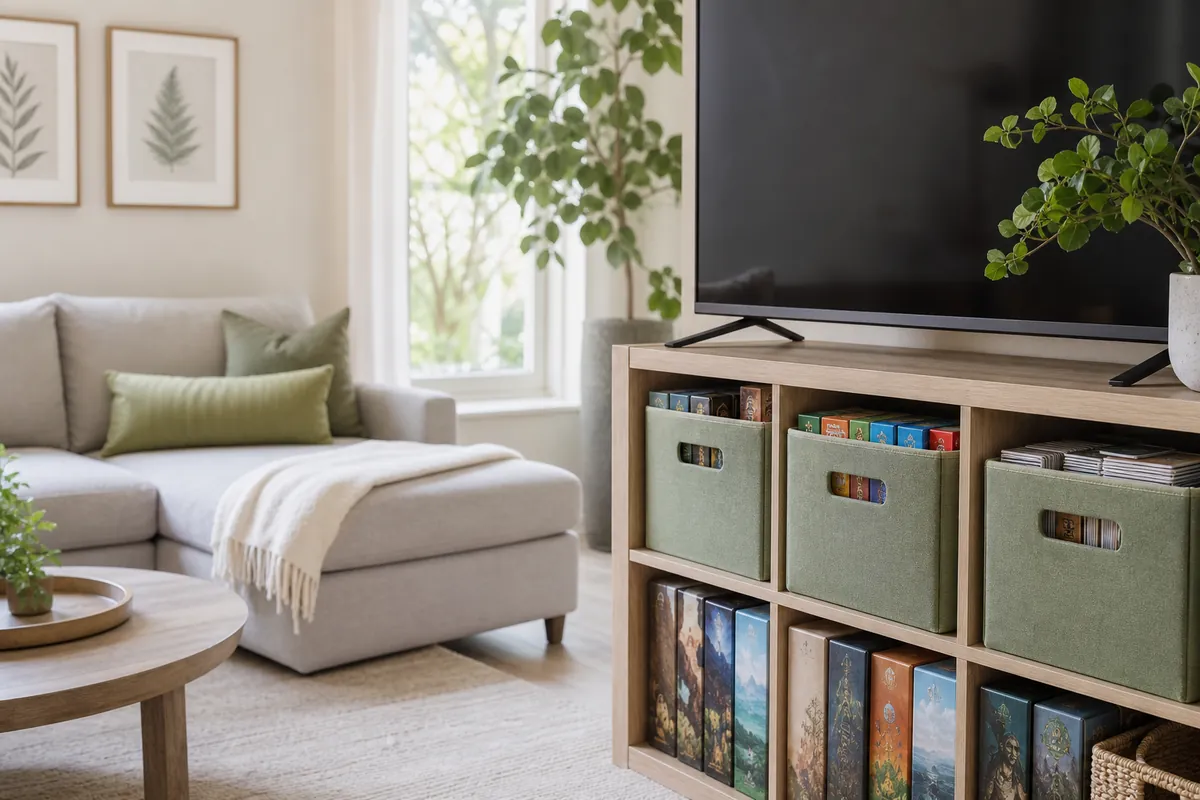
This is where the sizes matter. A set of cube storage bins is 11 by 11 by 11 inches, which sounds like it would take a big box game and does not, because the game is closer to 11 and a half and the bin is a shade under 11 inside.
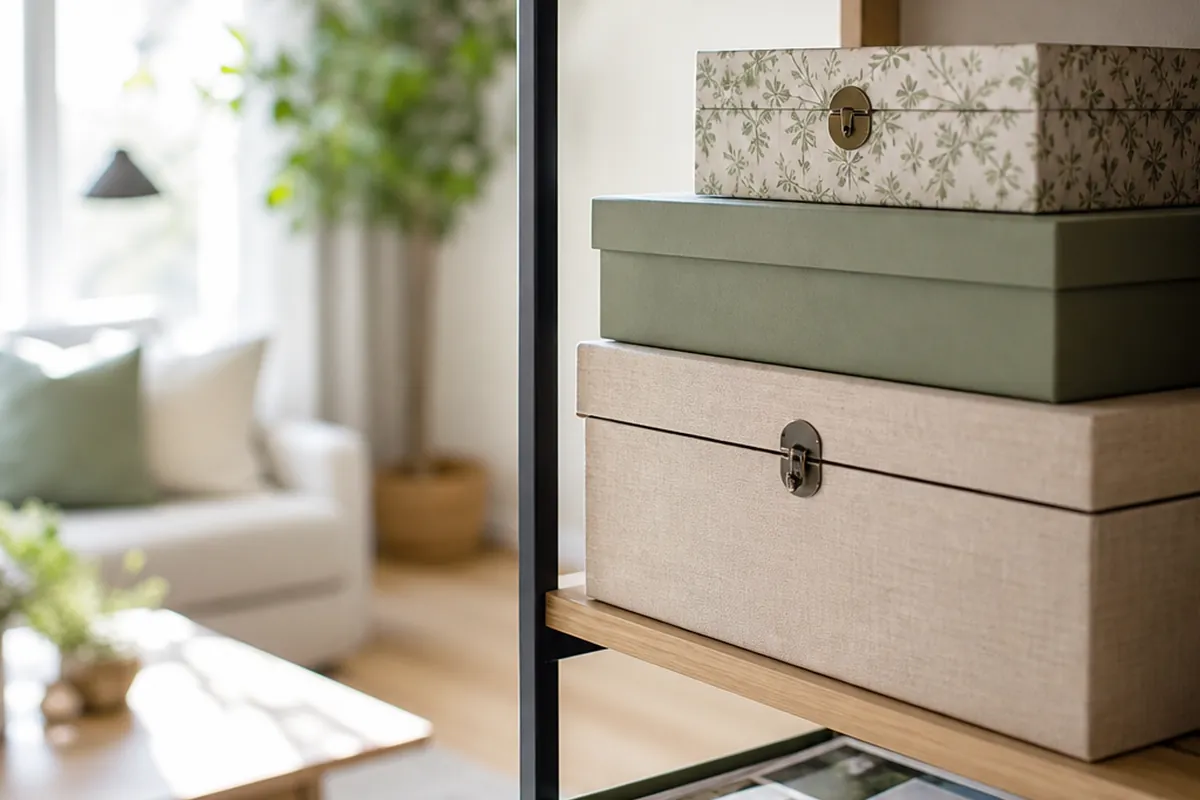
What they are genuinely good for is everything else: card games standing on edge, medium boxes, dice bags, score pads, the expansion that came in a box a third the size of the base game. Six bins in a cube unit gives you sorted categories instead of a drawer of loose cardboard, and the rope handles mean you can pull one out onto the table rather than digging in it on a shelf.
Put the big games on the open shelves and the small chaos in the bins. Trying it the other way round is the mistake.
6. Use an ottoman so the storage is also seating
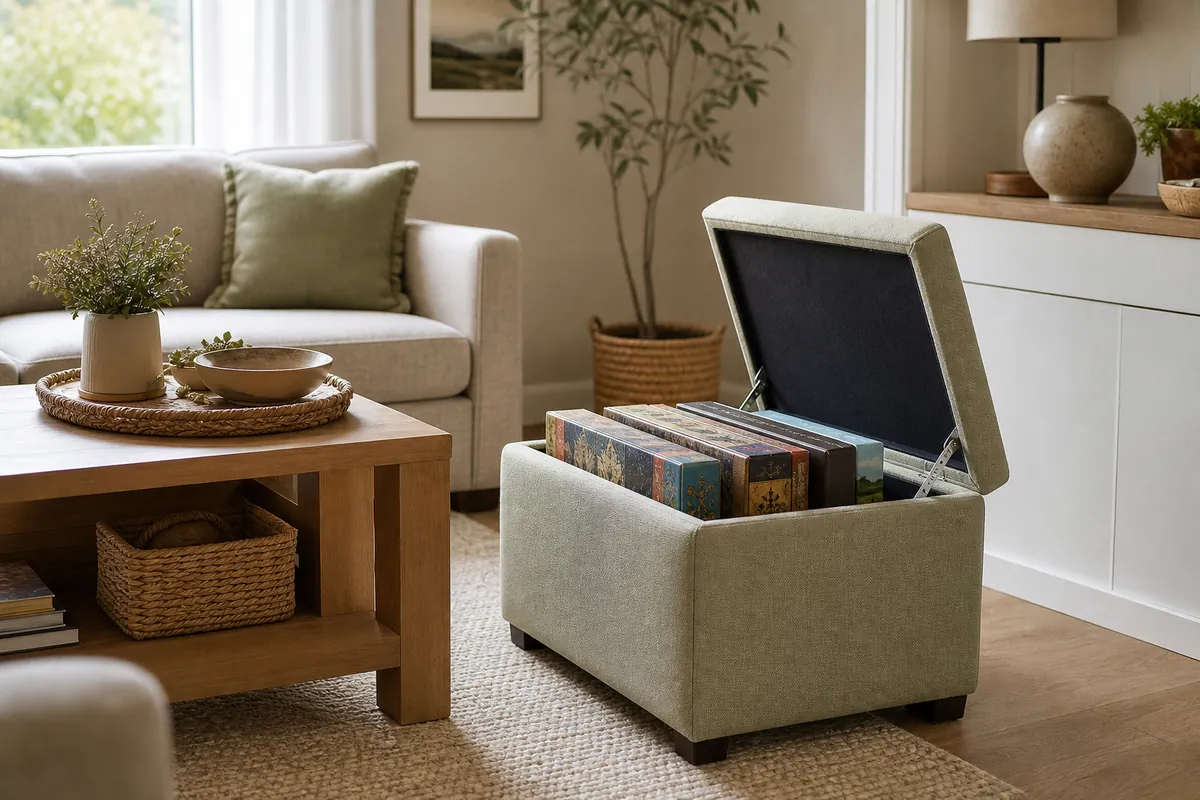
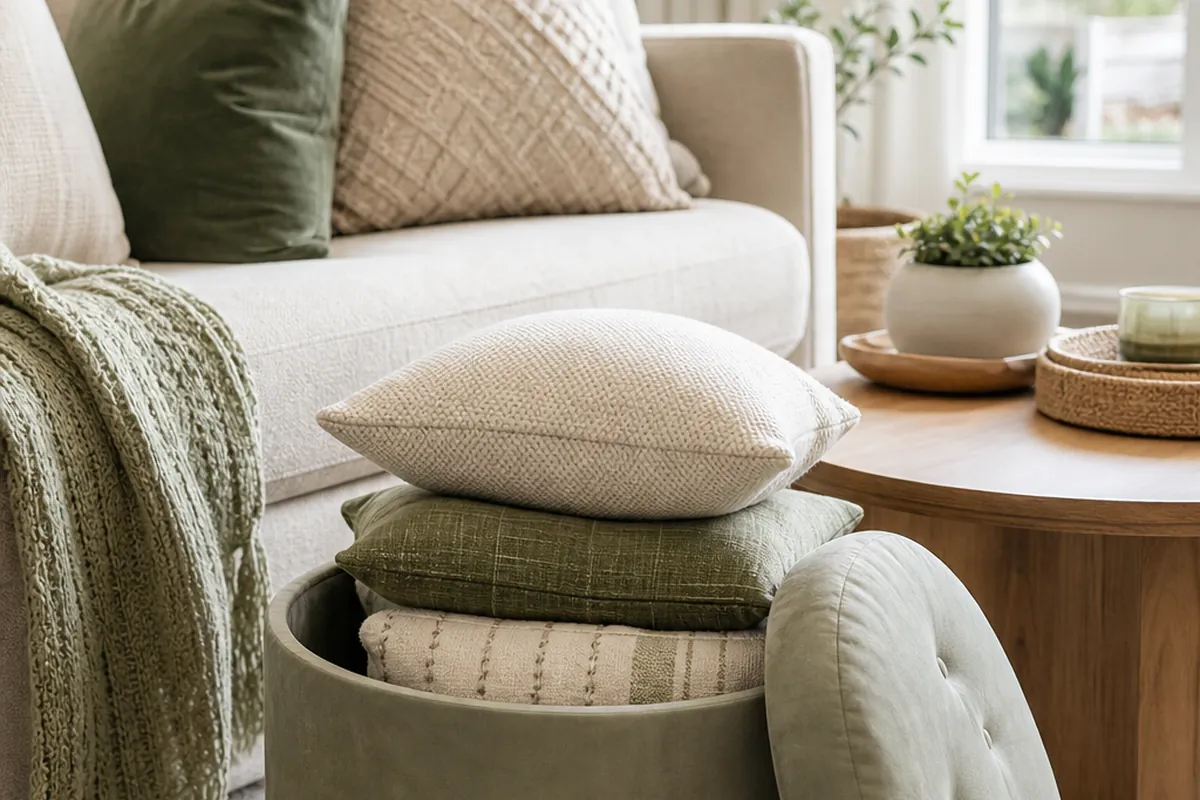
In a small living room the best storage is furniture you already needed. A storage ottoman with a lid at 30 inches wide by 15 deep and 15 tall swallows the big box games standing on edge, which is around eight or so depending on how thick they are.
Two things make it work better than a box under the bed. It is rated to 660 pounds, so it is genuinely a seat and not a decorative lid, and it sits next to the coffee table, which means the games are stored at the place they get played. Lifting a lid is a much lower barrier than crossing the flat.
If the room needs the seat more than the storage, the same logic runs through storage ottoman ideas for a small living room.
7. Keep a basket for the ones that break the rules
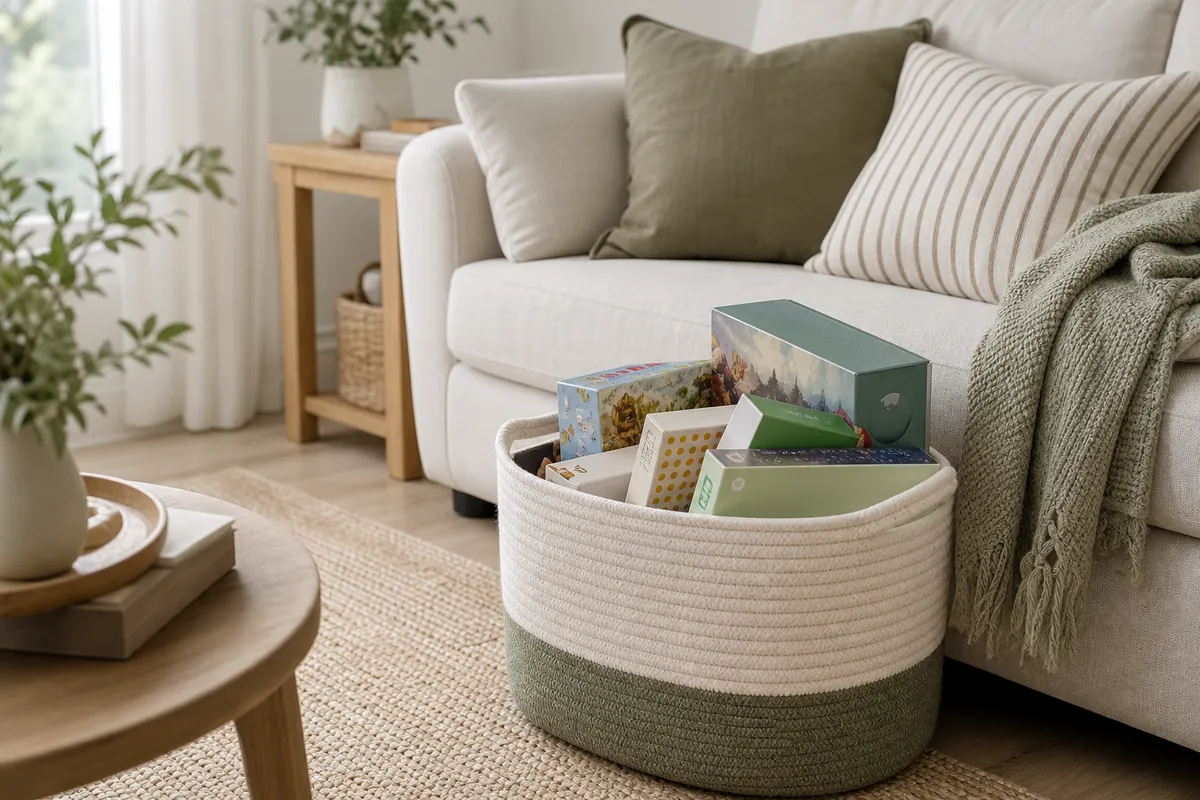
Every collection has a few items that defeat the system: the oversized kids’ game, the one in a tin, the jigsaw in a box shaped like nothing else.
Rather than redesigning the shelving around four awkward objects, give them a large woven storage basket. At 65 litres it takes the odd shapes without complaint, it has handles so a child can drag it out, and being soft sided it collapses flat in the months nobody is playing them.
A basket is also the right home for anything the kids own outright, which overlaps with toy storage in a small living room more than with the adult collection.
8. Bin the plastic insert and bag the pieces
The vacuum formed tray inside most games is moulded for the factory, not for you. It holds the pieces in a shape that assumes the box is lying flat and never moves, and it usually wastes an inch or two of depth on air.
Take it out, put the pieces in small zip bags by type, and lay the bags on the board. Plenty of games lose two inches of box thickness this way. Across a collection of twenty that is several games’ worth of shelf recovered for the price of a bag of bags.
Keep the insert for anything you might resell, and keep the rules sheet in the box rather than in a folder you will never find.
Puzzles have the same problem in a worse box, and puzzle storage ideas for a small kids’ room covers the ways to store them once the box has given up.
9. Give card games one container instead of nine
Small card games are the ones that actually go missing, because a box the size of a paperback disappears behind everything else.
Collect them into a single labeled bin or a shoe-box sized container and store them upright inside it. You lose the ability to see each individual game and gain the certainty that all of them are in one known place, which is the better trade for things you play spontaneously.
The same container is the right home for the loose parts that belong to no particular game: the spare dice, the sand timer, the pencils and pads. Those are the things that get hunted for at the start of an evening, and having them travel with the card games means one trip to the shelf rather than three.
10. Store them where you play them
The last one is the one that decides whether any of this holds.
Games kept in a bedroom closet or the top of an armoire get played far less than the same games two steps from the table, because the real cost of playing includes fetching, and fetching from another room is enough to tip a maybe into a no.
Under or beside the coffee table, in the ottoman, or on the lowest shelf of the TV unit. Convenient beats tidy for anything you want to happen on a weeknight.
If the coffee table itself is going to do the storing, coffee table storage for a small living room compares lift-tops with ottomans and explains why the inside needs dividing.
Under the TV is often the natural spot, and TV console storage ideas for a small living room covers how to fit games alongside the electronics without the doors bulging.
The pile was doing the damage
Board game storage in a small living room is not really about finding more space. It is about turning one inaccessible stack into a row of individually reachable boxes, sized honestly against what you own.
Stand them on edge, band the lids, put the big ones in the ottoman and the small ones in bins, and keep the whole thing within arm’s reach of the table. The collection will get played instead of stored.